Not all heavy loads behave the same way. Timber handling brings its own challenges, with long, uneven logs requiring a different approach to lifting, manoeuvring and load control. Whether loading timber onto trucks or building stacks at a depot, operators need to manage loads that can shift, roll or move unexpectedly.
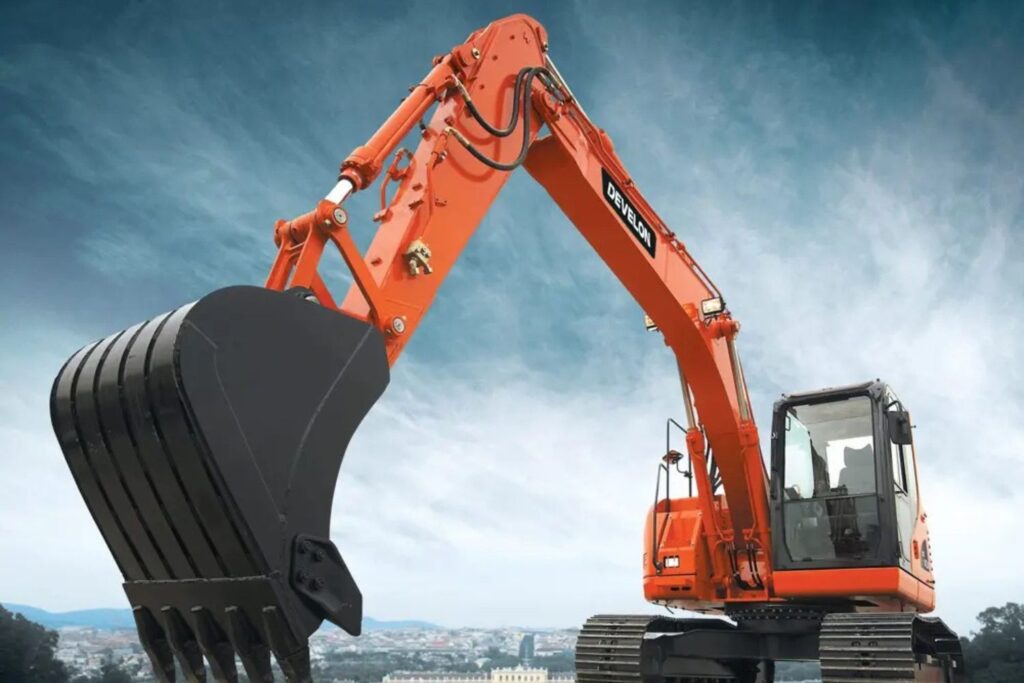
Earthmoving equipment can be adapted for this work, and a well-configured excavator can be a safe and productive solution. The adaptation only works when it is matched to the job, from the forest edge to the mill gate.
Where Standard Machine Configurations Fall Short
Most earthmoving equipment is designed for digging jobs, with strong breakout force, good reach, and a cab positioned to look down into a trench. Timber work changes what operators need to see, what poses a risk to the machine and how the load behaves once it is lifted. Converted construction excavators are common base carriers in South African forestry, fitted with harvester heads, processor heads and log-loading grapples.
Visibility over stacks and trucks, protection from falling or penetrating materials, stability on uneven ground with a longer-than-normal load in the air, and attachments that run hard through a full shift tend to be the first gaps to become apparent.
None of these are exotic nice-to-haves. They carry more weight in forestry than on most construction sites. The modifications that address these gaps make the most sense when considered against the work itself.
Loading and Stacking at Depots
The point where timber changes hands, from stack to truck, tests the operator’s view and a machine’s balance more directly than anywhere else on the journey. Two modifications do most of the work here, and they pull against each other.
Seeing Over the Stack
Picture a roadside depot on a plantation in Mpumalanga. An interlink timber truck is pulled up alongside, the stack beside it rises above a standard cab, and the operator has to place each length securely on the trailer while watching the ground crew and truck. A raised cab lifts the operator’s eye line for exactly this job, giving a clearer view of the trailer bed and the people around it.
Stability Has to Rise With the Cab
Height comes with a significant trade-off. Raising the cab lifts the machine’s centre of gravity, reducing stability. A heavier or wider undercarriage can help compensate by lowering the centre of gravity and increasing the machine’s footprint. However, a cab riser, heavier grapple and rotator also affect the machine’s rated lift capacity. The load chart must therefore be checked against the machine’s actual configuration, including the weight of the grapple, before lifting the first log.
That is why cab height, and stability features belong in the same conversation. A raised cab also changes how the machine handles and how the operator judges height and distance, so operators need training on that specific configuration.
Protecting the Operator
What Can Reach the Cab
A machine loading logs faces the risk of timber falling or rolling, while one used for felling or processing must also contend with flying debris and, where the harvesting head uses a chain and bar, chain shot. Tip-over and rollover protection (TOPS/ROPS) is the starting point, with forestry-specific requirements set out in ISO 8082, but protection against falling and penetrating objects requires additional consideration.
This means looking beyond tip-over and rollover protection to include falling-object protection (FOPS, ISO 3449) and operator protective structures for forestry machines (ISO 8084). Where a saw head is fitted, chain-shot guarding tested to ISO 11837 is also important.
Guard design matters as much as its strength. Bars must be spaced closely enough to stop branches and debris from passing through, without unnecessarily obstructing the operator’s visibility. They should also be shaped to deflect objects away from the cab.
Matching Protection to the Task
Roadside processing, in-field loading and mill yard work all have different exposure levels. Reinforced roof and front window guarding matter most when logs are loaded close to felling, and remain important wherever timber can fall, roll or be thrown, even when processing happens away from active felling.
What the machine will do, where it will work, how steep and rough the ground is, and what else is operating nearby should shape how modifications are approached. Modification itself needs care, since welding or drilling into a cab frame outside an approved process can compromise the structure.
Grapples and the Long Shift
At a busy roadside depot or log yard, a timber grapple works almost continuously, so a setup that looks adequate in a short demonstration can perform very differently by the end of a full shift.
Hydraulics Built for Repetition
A digging bucket follows a relatively straightforward dig, swing and dump cycle. A timber grapple adds clamping and rotation to each cycle, often while carrying a load. A rotating grapple typically requires two auxiliary hydraulic functions: open/close and rotate. With these circuits working continuously throughout the day, the hydraulic system faces greater demands, generating additional heat and increasing the load on the oil cooling system.
To keep the attachment responsive and maintain production rates, it is important to confirm that the machine has sufficient auxiliary hydraulic flow and oil cooling capacity for continuous grapple operation. Otherwise, overheating and reduced attachment performance can slow production and shorten component life.
Attachment Compatibility
Grapples, couplers and carriers need to work as a system. The grapple’s weight and rotator affect how the machine lifts and balances, while hose routing determines how well hydraulic lines withstand the demands of a full shift. An attachment that works well on one carrier may not be suited to another. Selecting the attachment first and then confirming the carrier’s compatibility (or, for an existing machine, confirming the attachment suits the carrier) helps avoid costly mismatches and performance compromises.
From the Roadside to the Mill Yard
As timber moves from the roadside to the mill yard, the operating environment changes from rough, uneven terrain to the demands of sustained, high-volume handling. The machine’s requirements change too, and a configuration suited to roadside loading may not be the best choice for handling timber at the mill.
Sawmill Yards
Ground conditions inside a sawmill yard are generally flatter, but the pace of work is more constant. Logs are sorted, fed, restacked and moved throughout the shift, requiring equipment to repeat short handling cycles continuously. Clear sightlines and operator comfort become particularly important in these conditions. When the same movements are repeated all day, even small operating errors can lead to unnecessary wear, damage and downtime.
Biomass and Woodchip
Biomass and woodchip operations involve moving large volumes of bulky material, making reach, attachment selection and visibility over the pile important considerations. Dry debris can accumulate around the engine and exhaust, creating a significant fire risk in timber and biomass applications. Engine-bay screening and a suitable fire suppression system should therefore form part of the machine specification.
The same principles of elevated cab design and improved visibility also apply to other bulk-handling applications, which DISA explores in its guide to special application excavators.
Configure Before the Machine Arrives
The right modifications start with an understanding of the work the machine needs to do, the conditions it will operate in and the demands of each shift. DISA takes an application-led approach to forestry enquiries, building the machine specification around the operation.
For operations considering earthmoving machines for timber handling, this conversation is worth having early. Getting the specification right before delivery helps ensure the machine is equipped for the demands of the job from its first shift, supporting safer operation, greater productivity and long-term performance.