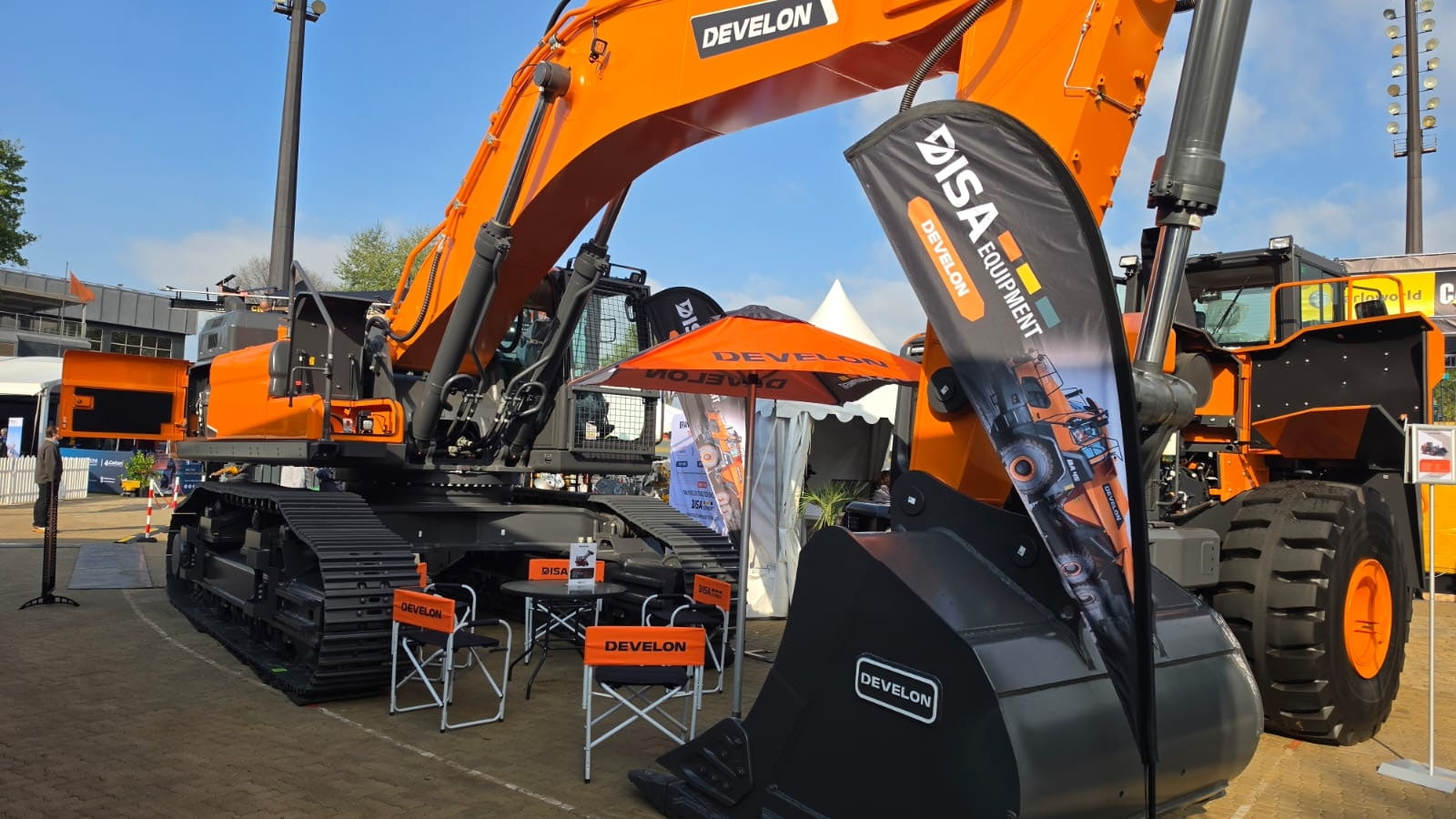
Searching for loaders for sale in South Africa often leads buyers straight to catalogues, listings, and quote forms. Those pages are useful when you already know exactly what you need. The hardest decision comes earlier: understanding which loader belongs in your operation, what it needs to handle every day, and how it will add value to the wider fleet.
A loader is not only a machine for moving material. On construction, quarrying, mining, and earthmoving sites, it influences stockpile control, truck loading, material handling speed, site cleanliness, and daily production flow. The right loader can remove pressure from excavators, improve loading consistency, and help teams move material with fewer interruptions. The wrong loader can create bottlenecks, increase wear, and leave operators working around machine limitations.
For businesses investing in earth moving machines, the strongest buying decision starts with the work, not the listing.
Start with the Job, Not the Machine Category
The first question to ask shouldn’t be “Which loader is available?”, but rather, “What does the loader need to do on this site?”
A loader supporting roadworks in Gauteng may need stronger mobility, quick cycle movement, and practical loading capability across changing site areas. A quarry in the Western Cape may place more pressure on bucket capacity, stability, and repeated loading of dense aggregate. A mining-related operation in Mpumalanga or the Northern Cape may need a machine that can handle longer shifts, heavier material, and tougher terrain conditions.
This is where a broad search for a loader for sale can be far too vague. Buyers may be looking at machines in the same category, but those machines can serve very different purposes depending on application, operating hours, ground conditions, material density, and fleet setup.
A practical loader decision should consider:
- What material will be moved most often
- How many hours the machine will work each day
- Whether the site is compact, open, level, uneven, or remote
- What trucks, excavators, crushers, or stockpile areas the loader will support
- How much service and support access the operation requires
This is how buyers move from browsing machines to identifying the right machine class.
Where Loaders Add Value to a Fleet
A loader can add value in several ways, but its role depends on how the site operates. On some projects, the loader is the primary material handling machine. On others, it supports excavators, keeps stockpiles managed, feeds trucks, or helps maintain working areas so production can continue smoothly.
In construction environments, loaders often help with flexibility. They can move material around the site, support backfilling, load trucks, clear working areas, and assist teams as the project changes. This makes them useful on sites where one machine needs to contribute across multiple stages of work.
In quarrying and bulk material environments, the loader’s value is often about its consistency. It needs to keep material moving, feed trucks or process areas, and perform repeated loading cycles without creating delays elsewhere on site.
In mining and heavy earthmoving environments, buyers usually need to think more carefully about machine durability, stability, and the pressure placed on equipment over long operating hours. A loader that is under-specified for this environment may look practical at the purchase stage, but struggle to deliver reliable value under daily production pressure.
Matching Loader Size to Site Conditions
When comparing loaders for sale in South Africa, machine size should be matched to the work rather than selected on appearance or availability alone. Bigger is not automatically better. Smaller is not automatically more cost-effective.
A smaller loader, like the Develon SD200, may be the better choice for tight construction sites, stockyard work, municipal support tasks, or lighter material handling. These environments may benefit from its manoeuvrability, lower operating costs, and easier movement around confined areas.
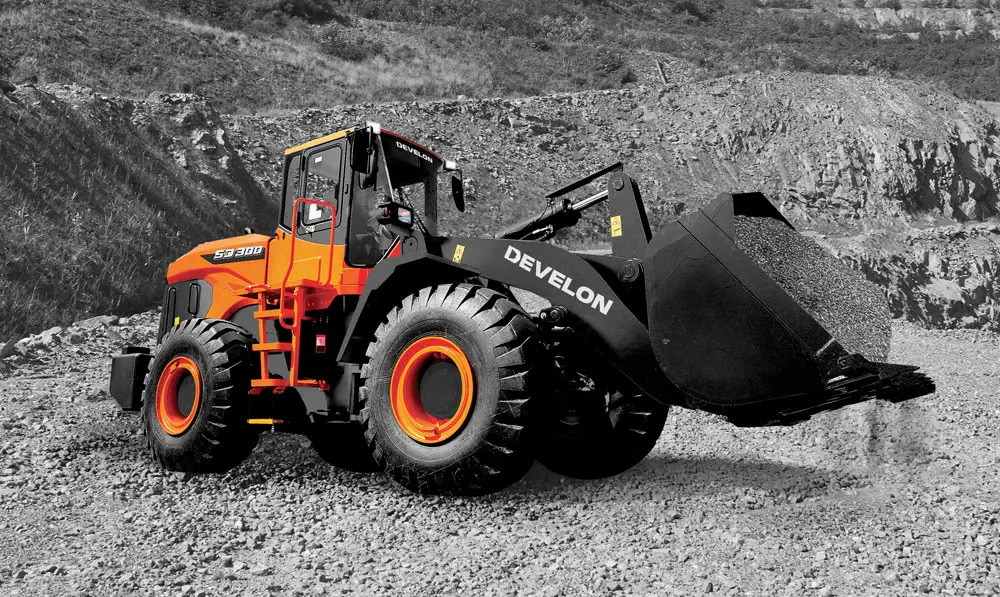
A mid-range loader may be better suited to regional construction projects, plant yards, aggregate handling, or mixed-use operations where the machine needs to balance capacity with daily flexibility. The Develon SD300, for example, can often serve as a strong all-rounder where the site needs reliable loading capability without over-investing in more machine than the job requires.
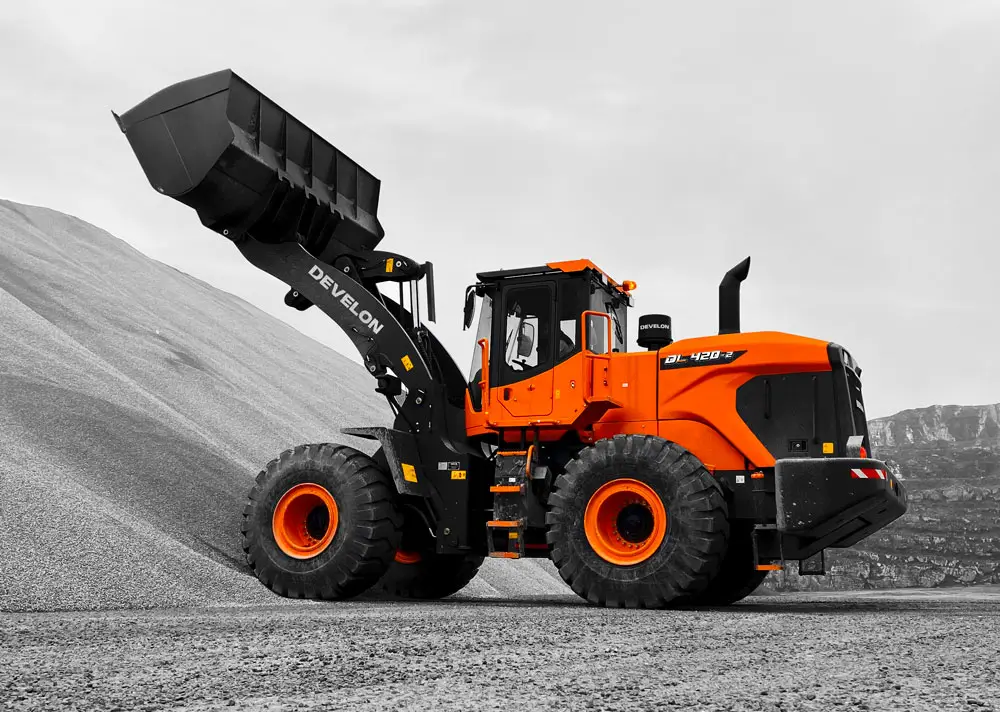
As a larger loader, the Develon DL420-2 becomes more relevant where the site depends on higher-volume loading, heavier material, or longer working hours. In quarries, mines, and high-output earthmoving operations, additional capacity and durability may support better long-term value because the machine is operating closer to the demands of the job.
The important point is not to buy the largest available loader or the one that seems most cost-effective. It is important to choose the loader that can perform the work consistently, without unnecessary strain or avoidable operating cost.
How the Loader Fits into Material Movement
A loader’s value is also shaped by how it works with the rest of the site. It may need to load trucks, support excavators, feed crushers, manage stockpiles, or keep material moving between production areas. If the loader can’t keep pace with operations, the impact can be felt across the workflow.
This doesn’t mean every loader decision needs a complex fleet study. It means buyers should understand the practical relationship between machine size, bucket capacity, loading height, truck type, terrain, and material flow.
This is where smarter material movement becomes the wider principle of equipment working together efficiently. The takeaway is simple: a loader should support the rhythm of the site, not work against it.
Choose a Loader That Belongs in the Operation
For businesses researching loaders for sale in South Africa, the best decision isn’t always the fastest quote or the most available machine. It’s the loader that fits the work, supports the fleet, and can be maintained effectively throughout its working life.
South African construction, mining, quarrying, and earthmoving sites place different demands on equipment. By starting with application, site conditions, material type, and fleet role, buyers can make a more confident decision and invest in a loader that adds real value to the operation.