On paper, two loaders may appear similar. On site, the difference shows up in fuel usage, cycle consistency, maintenance demands, operator confidence, and how well the machine handles the material it was bought to move. For procurement teams, fleet managers, and business owners, this is why loader pricing should never be evaluated in isolation. The real question is whether it can deliver reliable value across the conditions, workloads, and production pressures of the project.
Front-end loader cost is shaped by far more than machine size or purchase price. Application, bucket capacity, machine class, fuel efficiency, support availability, parts access, and long-term servicing requirements all influence the cost of ownership. A loader that looks more affordable at the point of purchase can become expensive if it is under-specified for the job, difficult to maintain, or poorly matched to the rest of the fleet.
For buyers evaluating construction equipment, understanding the full cost picture helps avoid short-term decisions that create long-term operational pressure. DISA’s approach is to look beyond the price tag and consider how the right machine (backed by the right support) can keep projects moving.
What Shapes Loader Cost Beyond the Price Tag?
Front-end loader cost is influenced by more than the machine’s size or purchase price. The real cost drivers often sit in the conditions the loader will face every day: the type of material being moved, the intensity of the workload, the terrain underfoot, the available working space, and how easily the machine can be serviced over time.
A smaller loader may be well suited to lighter-duty construction support, stockpile management, or work on tighter sites where manoeuvrability is more important than high-volume loading. Larger machines, however, are built for heavier workloads, bigger bucket capacities, longer working hours, and more demanding environments. That additional capability affects the initial investment, but also influences fuel consumption, tyre wear, transport requirements, operator demands, and maintenance planning.
This is why DISA’s approach to loader selection starts with the application. A machine working in a coastal construction environment in KwaZulu-Natal won’t face the same daily demands as a loader handling aggregate in a Gauteng quarry or supporting mining activity in Mpumalanga. Buying below the application requirement may reduce upfront spend, but it can lead to higher wear, more downtime, and earlier replacement pressure over time.
Matching Loader Class to Real South African Site Conditions
The strongest buying decisions usually begin with the site, not the price list. A business handling lighter construction material on a compact urban site may not need the same machine as a quarry loading heavy aggregate throughout the day. An operation supporting haul trucks needs to consider loading height, bucket capacity, machine stability, and the wider fleet setup.
For example, the Develon SD200 offers a practical option for lighter-duty work, with a 7,850 kg static Tipping Load and 1.7 m³ bucket capacity. In a scenario like a municipal works project, smaller construction yard, or building materials site in Gauteng, this class of machine may offer the manoeuvrability and capability needed without over-investing in more machine than the job requires.
The DL420A-7M sits in a heavier class, with a 17,890 kg operating weight and 3.9 m³ bucket capacity. This makes it more relevant for demanding material handling environments where the loader needs to maintain productivity across tougher conditions. A quarry operation in the Western Cape or a bulk materials site serving regional construction projects, for example, may need this balance of durability, loading capability, and day-to-day reliability.
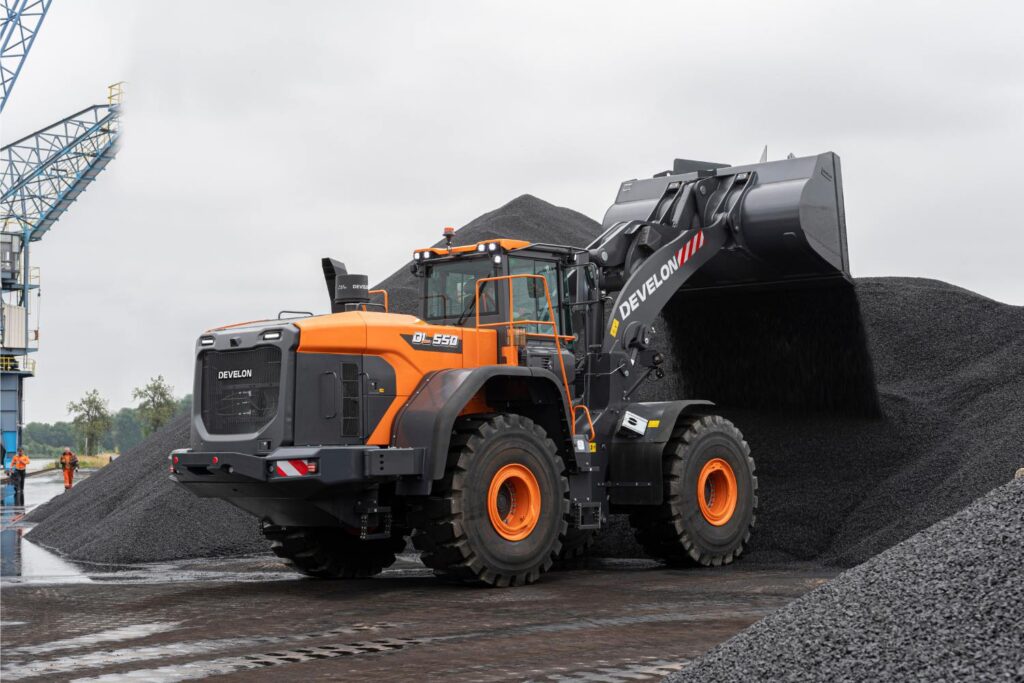
For higher-output applications, the Develon DL550 offers a larger 5.4 m³ bucket capacity and higher operating weight, making it more suited to sites where volume and consistency are central to the project. In a high-production mining or quarry environment in the Northern Cape, this type of loader may be more appropriate where the priority is moving larger volumes of material reliably over long working hours.
The right investment is not necessarily the lowest-cost option, but the machine that can handle the site demands without unnecessary strain, inefficiency, or long-term support challenges.
Why Fleet Compatibility Affects Long-Term Value
A loader doesn’t work in isolation. It’s part of a wider material movement system involving excavators, haul trucks, ADTs, rigid trucks, crushers, or stockpile areas. If the loader is incorrectly matched to the rest of the fleet, the operation may experience bottlenecks that affect productivity.
This makes choosing the right equipment an important step. In practice, buyers may be trying to understand how a loader works with haulage equipment, not looking for a single machine type. The relationship between loading equipment and trucks matters because poor matching can lead to unnecessary idle time, inefficient loading, and increased operating pressure.
How Operating Costs Change a True Loader Investment
When evaluating front-end loader cost, the purchase price should be viewed as one part of the investment. Two machines with similar specifications can deliver very different ownership experiences depending on how they’re used, maintained, and supported.
For procurement teams and fleet managers, the more useful question is: What will this machine cost to operate over its working life?
Ownership factor | What to check | Why it matters |
Application fit | Material type, loading cycles, site demands | Prevents over- or under-specifying the machine |
Daily utilisation |
Expected operating hours
| Higher use increases the need for durability and fuel efficiency |
Maintenance planning | Service intervals and access points | Helps reduce interruptions to production |
Downtime risk | Impact if the loader is unavailable | Shows how much support responsiveness matters |
Operator productivity | Visibility, comfort, controls | Supports safer, more consistent output |
Fleet integration | Fit with trucks, excavators, crushers, or stockpiles | Reduces bottlenecks in material movement |
Support infrastructure | Parts, technicians, warranty guidance | Protects uptime and long-term value |
This is where an experienced equipment partner adds value. DISA supports buyers in assessing the application, comparing machine classes, and evaluating the operational factors that influence long-term ownership costs.
Making a Cost Decision That Supports Long-Term Value
Front-end loader cost should always be measured against the work the machine is expected to perform. The right investment isn’t the cheapest option or the largest model available, but the one that fits the application, supports the fleet, and can be reliably maintained throughout its lifecycle.
For construction, mining, quarrying, and earthmoving buyers, this broader view leads to better decisions. By weighing site conditions, productivity expectations, support, and lifecycle value, businesses can invest with confidence and avoid cost decisions that only look good on paper.